
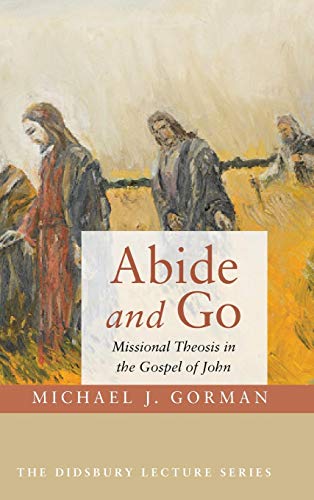
Abide and go : [manuscript] : missional theosis in the Gospel of John / by Michael J. Gorman.
Material type: TextSeries: Didsbury lectures ; 2016 | Didsbury lectures ; 2016.Publisher: Eugene, Oregon : Cascade Books, 2018Copyright date: ♭2018Description: xviii, 238 pages ; 24 cmContent type:
 - text
- unmediated
- volume
- 9781532615474 (hpb)
- 9781532615450
- 1532615477
- 9781532615474
- 226.506 23
- BS2615.52 .G666 2018
| Item type | Current library | Call number | Status | Barcode | |
|---|---|---|---|---|---|
 Books
Books
|
Ethiopian Graduate School of Theology Library Available at Circulation Section | 226.506 Gor 2018 (Browse shelf(Opens below)) | Available | 22087 |
Includes bibliographical references (pages 203-215) and indexes.
Reading John missionally and theotically -- Missional theosis in John : structure, theme, and chapters 1-12 -- Abide and go : missional theosis in John 13-16 -- As the Father has sent me (I) : missional theosis in John 17 -- As the Father has sent me (II) : missional theosis in John 20-21 -- Extreme missional theosis : John's implicit ethic of enemy-love -- Conclusions and hermeneutical reflections on contemporary missional theosis.
The Gospel of John would seem to be both the "spiritual Gospel" and a Gospel that promotes Christian mission. Some interpreters, however, have found John to be the product of a sectarian community that promotes a very narrow view of Christian mission and advocates neither love of neighbor nor love of enemy. In this book for both the academy and the church, Michael Gorman argues that John has a profound spirituality that is robustly missional, and that it can be summarized in the paradoxical phrase "Abide and go," from John 15. Disciples participate in the divine love and life, and therefore in the life-giving mission of God manifested in the ministry and death of Jesus. As God's children, disciples become more and more like this missional God as they become like his Son by the work of the Spirit. This spirituality, argues Gorman, can be called missional theosis.
There are no comments on this title.